How Often to Clean Solar Panels in Sacramento
Learn the ideal cleaning schedule for solar panels in Sacramento. Clean every 6-12 months, more often with dust, pollen, or ash.
How Often Should Solar Panels Be Cleaned in the Sacramento Area?
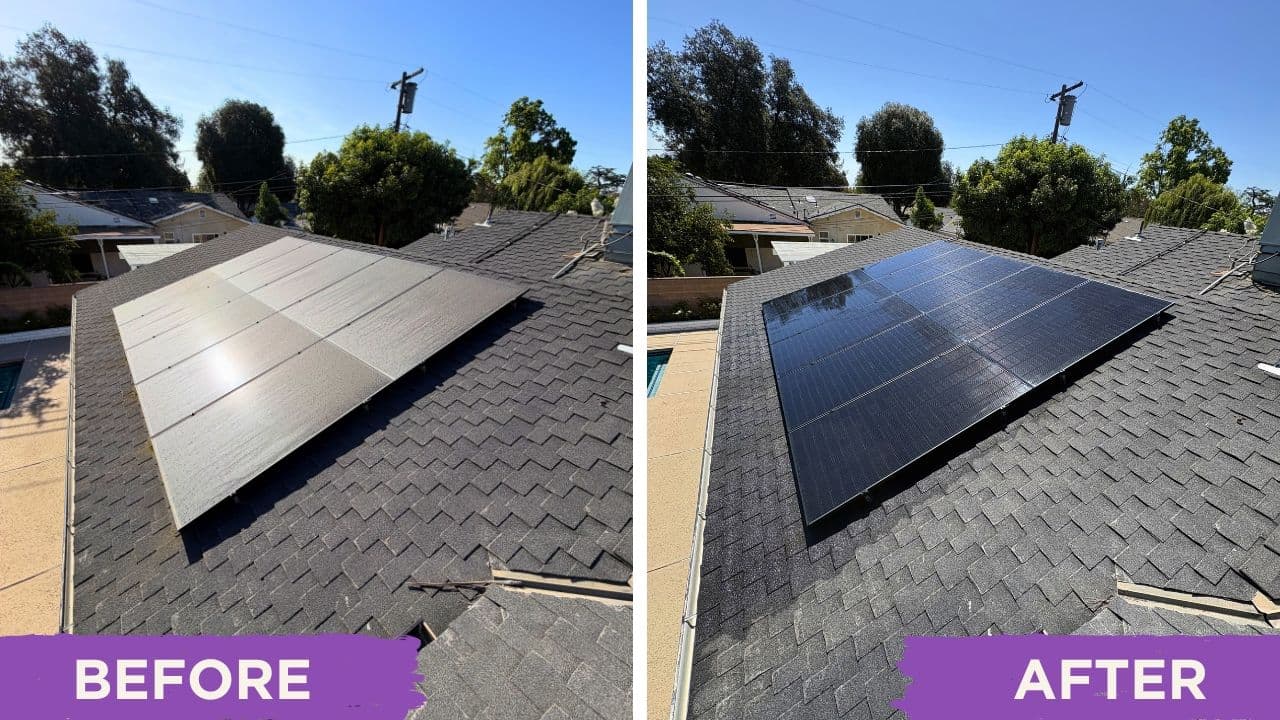
Most solar panels in the Sacramento area should be professionally cleaned every six to twelve months. However, properties exposed to heavy dust, pollen, bird activity, nearby construction or wildfire ash may benefit from cleaning every three to six months.
There isn’t one perfect schedule for every home. A solar panel system in a quiet Roseville neighborhood may stay relatively clean for most of the year, while panels near a busy road, open field or large tree can develop visible buildup much faster.
The goal is to clean your panels often enough to prevent dirt from blocking sunlight—without scheduling unnecessary service.
Why Sacramento-Area Solar Panels Get Dirty
Sacramento and the surrounding communities receive plenty of sunshine, but the region also has long stretches of dry weather. Without regular rainfall, dust and debris can remain on solar panels for weeks or even months.
Common sources of buildup include:
Dust carried by wind and passing vehicles
Spring pollen
Bird droppings and nesting activity
Leaves, seeds and debris from nearby trees
Dirt from construction or landscaping
Agricultural dust in rural areas
Smoke particles and ash during wildfire season
Mineral deposits left behind by sprinklers or hard water
Light dust may not seem like a major problem at first. Over time, however, it can combine with pollen, moisture and bird droppings to form a layer that ordinary rain may not completely remove.
Recommended Solar Panel Cleaning Schedule
The right cleaning frequency depends on where your property is located and what surrounds it.
Property conditionsSuggested cleaning frequencyTypical residential propertyEvery 6–12 monthsPanels near trees or frequent bird activityEvery 4–6 monthsProperty near a busy road or constructionEvery 3–6 monthsRural or agricultural surroundingsEvery 3–6 monthsVisible ash after a wildfireAs needed once conditions are safeHeavy bird droppings or noticeable buildupSchedule an inspection promptly
For many Sacramento-area homeowners, one cleaning in late spring or early summer provides a practical starting point. This removes buildup from winter weather and spring pollen before the sunniest part of the year.
Properties that collect dirt more quickly may benefit from a second cleaning in late summer or early fall.
Signs Your Solar Panels May Need Cleaning
You don’t always have to wait for a specific month on the calendar. Your panels may need attention sooner if you notice any of the following:
Visible Dust or Discoloration
Solar panels should have a relatively even, reflective appearance. If sections look cloudy, brown or covered in a film, dirt may be preventing sunlight from reaching the panel surface effectively.
Bird Droppings
Unlike loose dust, bird droppings are unlikely to wash away completely during light rain. They can also create concentrated areas of obstruction, particularly when birds repeatedly gather near the same portion of the roof.
Leaves or Debris Under the Panels
Leaves, twigs and nesting material can collect around panel edges and beneath the mounting system. This type of debris should be removed carefully without damaging the panels, wiring or roof.
Lower-Than-Expected Energy Production
A change in energy production does not automatically mean the panels are dirty. Weather, shade, equipment problems and seasonal changes can also affect output.
However, if production appears lower than expected and the panels are visibly dirty, cleaning is a reasonable first step before assuming the system has a mechanical problem.
Sprinkler Spots or Hard Water Deposits
Sprinklers that reach the roof can leave mineral deposits on the glass. These marks may become increasingly difficult to remove if they are allowed to build up over time.
Does Rain Clean Solar Panels?
Rain can rinse away some loose dust, but it usually does not provide the same result as a proper solar panel cleaning.
Think about what happens to a car that sits outside during the rain. It may look better from a distance, but dirt, water spots and residue often remain once it dries. Solar panels can experience the same problem.
Rain is especially unlikely to remove:
Bird droppings
Sticky pollen
Oily airborne residue
Caked-on dirt
Mineral deposits
Debris trapped around panel frames
Rain can also move dust toward the lower edge of tilted panels, creating a dirty band along the frame.
When Is the Best Time to Clean Solar Panels in Sacramento?
The most useful cleaning schedule follows local conditions rather than an arbitrary date.
Late Spring or Early Summer
This is a good time to remove winter debris and spring pollen before Sacramento’s longest stretch of dry, sunny weather. For homeowners scheduling one annual cleaning, this is often the most practical season.
Late Summer or Early Fall
A second cleaning may be helpful after months of dry weather, especially if the panels have collected dust, bird droppings or smoke residue.
After Nearby Construction
Roofing, landscaping, roadwork and new construction can place a surprising amount of dust in the air. Panels near an active project may need cleaning sooner than usual.
After Wildfire Ash
If ash has settled on the panels, avoid wiping it across the glass while it is dry. Abrasive particles may scratch the surface. Wait until outdoor conditions are safe and arrange for the ash to be removed using an appropriate low-abrasion method.
Can Solar Panels Be Pressure Washed?
Solar panels should generally not be cleaned with high-pressure water. Excessive pressure may damage seals, wiring, panel surfaces or mounting components.
Professional cleaning should use methods appropriate for solar glass, such as:
Purified or deionized water
Soft, non-abrasive brushes
Controlled water pressure
Equipment designed to reach rooftop panels safely
Cleaning during cooler parts of the day when appropriate
Household detergents and abrasive scrubbers should also be avoided unless they are specifically approved by the panel manufacturer. They can leave residue or damage protective surfaces.
Buddy Bright provides professional solar panel cleaning in Sacramento using non-abrasive methods designed to remove buildup without unnecessarily stressing the panels.
Should You Clean Solar Panels Yourself?
Some ground-mounted systems may be accessible, but cleaning rooftop panels introduces several risks. Wet roofs can be slippery, and working near panel wiring requires additional care.
Before attempting to clean the panels yourself, consider:
The height and pitch of the roof
Whether the roof surface becomes slippery when wet
Nearby electrical equipment
Manufacturer cleaning instructions
Whether you can reach every panel without leaning on it
The mineral content of your water
Whether specialized safety equipment is needed
If the system is difficult to access, professional cleaning is usually the safer choice.
Is Annual Cleaning Enough?
Annual cleaning is enough for many Sacramento-area properties, but it should be treated as a starting point rather than a universal rule.
Check the panels periodically from a safe position on the ground. If they remain relatively clean and energy production appears normal, a yearly visit may be sufficient. If dirt returns quickly, move to a twice-yearly or seasonal schedule.
The condition of the panels should ultimately determine the schedule.
Frequently Asked Questions
How often should solar panels be cleaned in Roseville?
Most solar panels in Roseville should be cleaned every six to twelve months. Homes near trees, busy roads, construction sites or areas with frequent bird activity may need service every three to six months.
Does cleaning solar panels improve their efficiency?
Cleaning can help when dust, pollen, droppings or other buildup is blocking sunlight. The amount of improvement varies based on how dirty the panels were before cleaning and whether other system issues are present.
Will cleaning solar panels damage them?
Cleaning should not damage properly installed panels when suitable equipment and non-abrasive methods are used. High-pressure washing, harsh chemicals and abrasive scrubbers should be avoided.
Do tilted solar panels need to be cleaned?
Yes. Tilted panels shed some loose debris more easily than flat panels, but dirt can still accumulate along the lower edges and around the frames.
How can I tell whether low production is caused by dirty panels?
Look for visible buildup and compare current production with the same season in previous years, if that information is available. If performance remains low after cleaning, the system may need to be inspected by a qualified solar professional.
Should solar panels be cleaned after wildfire smoke?
Inspect them from the ground once outdoor conditions are safe. If ash or smoke residue is visible, arrange for gentle cleaning instead of dry wiping the panels.
Keep Your Solar Panels Ready for Sacramento Sunshine
For most Sacramento-area homeowners, cleaning solar panels every six to twelve months is a sensible schedule. More frequent cleaning may be necessary when panels are exposed to heavy dust, trees, birds, construction or wildfire ash.
Buddy Bright serves homeowners throughout Roseville, Sacramento and nearby communities.